Sofia Fischer · 19 September 2026
Examining How Real-Time Data Tools Reshape Inventory Decisions for Specialized Online Storefronts in Fluctuating Markets
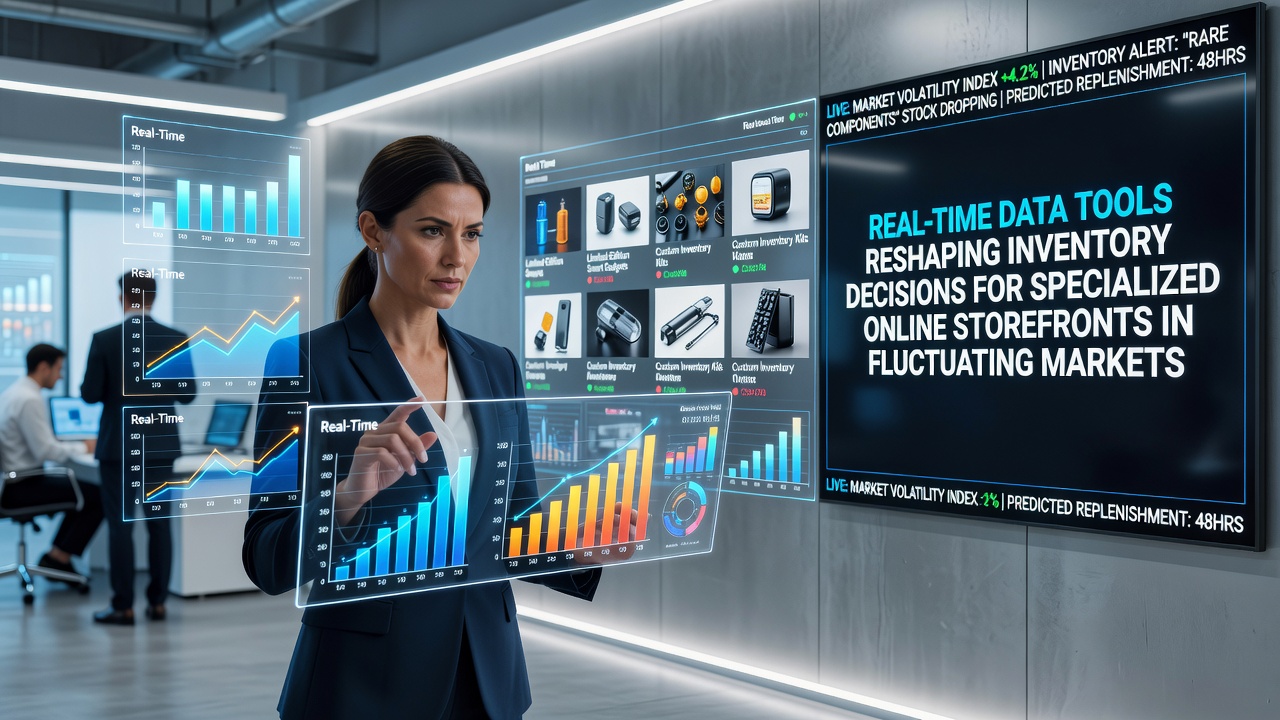
Specialized online storefronts operate in environments where demand shifts occur rapidly and supply chains face constant pressure from external variables, and real-time data tools have become central to inventory management strategies that adapt to these conditions without delay. These platforms handle niche products ranging from custom industrial components to limited-edition collectibles, and the ability to monitor stock levels, supplier performance, and customer behavior simultaneously allows operators to adjust orders and allocations in response to live market signals rather than relying on periodic reports or historical averages.
Core Mechanisms Driving Inventory Adjustments
Real-time data platforms integrate inputs from point-of-sale systems, warehouse sensors, and external market feeds into unified interfaces that update continuously, and specialized retailers use these feeds to set automated triggers for reorder points that reflect current velocity rather than fixed thresholds. When demand spikes in one product category while another slows, the systems flag imbalances immediately, which lets purchasing teams redirect resources before overstock accumulates or shortages develop. Research from academic institutions such as those affiliated with the University of Melbourne has documented how such integration reduces average stockout durations by measurable percentages in volatile segments, while similar patterns appear in reports compiled by Statistics Canada on digital retail operations.
Fluctuating markets introduce additional layers of complexity through sudden tariff changes, currency movements, and regional disruptions, yet the same data streams that track internal inventory also pull in macroeconomic indicators that influence pricing and availability forecasts. Operators can therefore model multiple scenarios in parallel, testing how a supplier delay in one region might affect overall fulfillment rates across their catalog. This capability proves especially valuable for storefronts dealing in seasonal or event-driven goods, where timing directly determines whether inventory turns profitably or sits idle.
Implementation Patterns Across Different Storefront Types
One study revealed that retailers focused on specialized electronics components adopted sensor-based tracking earlier than those handling apparel or home goods, and the resulting data density allowed them to maintain leaner safety stocks even during periods of component scarcity. In contrast, operators in the custom furniture space combined real-time sales data with supplier lead-time feeds to coordinate just-in-time production schedules that align more closely with confirmed orders. These approaches share a common thread in their dependence on clean, high-frequency data rather than broad industry benchmarks.

September 2026 brought heightened attention to these practices when several trade publications highlighted platforms that successfully navigated simultaneous shipping delays and demand surges in the specialty tool market. Observers noted that the storefronts which maintained continuous data connections to both domestic and international suppliers experienced fewer fulfillment interruptions than those depending on weekly batch updates. The distinction mattered most for items with long manufacturing cycles, where even small timing errors compound into significant revenue gaps.
External Data Sources and Their Role
Beyond internal metrics, real-time tools now routinely incorporate public datasets that track broader economic conditions, and links to official repositories such as the U.S. Census Bureau retail trade statistics provide context for interpreting sales anomalies. European operators often reference Eurostat figures on cross-border e-commerce volumes to calibrate expectations around import-dependent categories, creating a more layered view of market pressure. Academic papers examining supply chain resilience further supplement these sources by offering frameworks for interpreting volatility patterns that appear across multiple regions simultaneously.
Specialized storefronts have also begun layering weather, social media sentiment, and logistics delay alerts into their dashboards, and these additional streams help refine inventory positioning ahead of anticipated demand shifts. A storefront selling outdoor equipment, for instance, can correlate regional weather forecasts with historical purchase data to pre-position stock in areas expecting favorable conditions, while simultaneously reducing allocations elsewhere. The integration requires careful calibration to avoid false signals, yet the underlying technology has matured enough that many platforms now offer pre-built connectors for these data types.
Challenges in Maintaining Data Accuracy
Data quality remains a persistent concern because incomplete or delayed feeds can produce misleading recommendations that compound over time, and specialized retailers address this by establishing validation routines that cross-check automated alerts against multiple independent sources. When a sudden drop in sales velocity appears, teams verify whether the change stems from actual demand softening or from a temporary website issue before adjusting orders. This verification step prevents over-correction and preserves the integrity of the overall system.
Training requirements also surface as storefronts expand their use of these tools, since staff must understand both the technical interfaces and the business logic behind suggested actions. Organizations that invest in ongoing education report smoother adoption curves, particularly when new team members join during periods of market stress. The combination of automated monitoring and human oversight produces inventory decisions that reflect both quantitative signals and qualitative context unavailable to purely algorithmic systems.
Conclusion
Real-time data tools continue to influence how specialized online storefronts allocate resources in markets characterized by frequent change, and the patterns observed across different product categories suggest that integration depth rather than tool sophistication determines outcomes. As external data sources become more accessible and internal systems more interconnected, the capacity to respond to fluctuations in hours instead of weeks becomes a standard operational feature rather than a competitive differentiator. Those who maintain disciplined data governance alongside these capabilities position their inventory practices to handle whatever market conditions emerge next.